
PIANO NAZIONALE DI RIPRESA E RESILIENZA (PNRR) – MISSIONE 4 “Istruzione e Ricerca” – COMPONENTE 2 – INVESTIMENTO 1.1 – “Fondo per il Programma Nazionale di Ricerca e Progetti di Rilevante Interesse Nazionale (PRIN)” – 2022MCAA2T
Share_Div
Unveiling the social lives of shared housing between strangers in Italy
Why do people that are mutually strangers live together, potentially for long, under the same roof? What makes their dwelling experience ‘successful’ or not, and what broader societal questions does it show and redefine, e.g. in terms of inequality and discrimination in housing markets and pathways? These are emerging research and policy questions at the intersection of housing, home and social welfare studies. Shared housing among strangers is an understudied configuration of the housing market in Italy, likely relevant both for its reach and its biographical implications. It may be driven by market dynamics, or by policy and grassroots solidarity initiatives. It may be a second-best or even an emergency option, possibly after a biographical rupture, or a deliberately chosen one. What are the key commonalities and societal implications across its different drivers and temporalities? What factors shape everyday boundary-making and home-making under the same roof, depending on the quality of housing infrastructures, on the characteristics of local contexts and on intersectional and interpersonal encounters between diverse dwellers (in terms of age, gender, class, ethnicity, and life projects)? How do inequalities and vulnerabilities shape the shared experience of a house, and the opportunities to enter or leave it? And what is the role of local labour and housing markets, and of welfare policies and civil society initiatives, in accounting for the distribution, composition and sustainability of shared housing?
On all these questions, little and sparse knowledge is available in the case of Italy. Against this background, Share_Div aims to a comparative analysis of the social boundaries, material cultures and patterns of interaction that shape everyday life under the same roof, at micro level; of the interaction between shared housing and the external structure of opportunity, including place-specific forms of sociability, at meso level; of the potential and limitations of this housing configuration to address emerging housing needs, and the role of competing actors and stakeholders in orienting it, at macro level. Working across these analytical levels, Share_Div combines multi-sited in-depth fieldwork with a systematic exploration of the external determinants of shared housing, in critical conversation with housing, home, migration and local welfare studies. Based on a range of methodological options to capture local differences and the intersectional implications of dwellers’ backgrounds and housing pathways, Share_Div will provide a sociologically thick account in two respects: the mechanisms shaping the lived experience of shared housing, and the prospects and dilemmas of local policy, market and civil society in coping with it. The project will enhance the theoretical and empirical understanding of shared housing in diversity, and will provide an evidence base for policy-making and service provision in local housing and welfare.
Principal investigators: Paolo Boccagni (University of Trento), Eduardo Barberis (University of Urbino)
Researchers: Silvia Antinori and Emiliano Esposito (University of Trento); Andrea Abbati and Chiara Davoli (University of Urbino)
Team

Andrea Abbati is a doctoral student in Global Studies, Economy, Society, and Law at the University of Urbino. Currently, she serves as a research fellow at the same university. Her research interests primarily revolve around economic and labour dynamics, particularly within the context of migration. Her studies delve into the intricacies of migrant labour, particularly focusing on non-European migrant workers in Romania. Specifically, her research investigates the role of intermediaries in migrant labour pathways, exploring both the formal processes and the irregularities that can arise within this intermediary framework. In addition, she has focused on workers’ housing and the related processes of workforce control and precariousness. She examines how housing conditions impact labour dynamics and contribute to the precarious nature of work experienced by migrant workers.

Silvia Antinori is a cultural anthropologist, Ph.D. in Social and Urban Anthropology. She is currently a research fellow at the University of Trento. Her research interests mainly focus on subjects related to migration processes, urban and housing issues, intersections between forms of violence, body, and subjectivity in marginal spaces. She has recently dealt with forms of intersection between migration processes and homelessness; she is the author of articles and essays in collective volumes. Alongside her research activity, since 2015 she has been working as anthropologist/ social worker within the reception system for asylum seekers and other support projects for migrants, both in ordinary and “vulnerability”/”mental suffering” programs; therefore, she has deepend studies in the legal field of asylum and in the ethnopsycholgical area, gaining experience in the design and implementation, in interdisciplinary teams, of pathways aimed at psychosocial support for migrants in various contexts across the mediterranean area. As an independent researcher, she has been involved in urban, artistic, and gender-related projects.
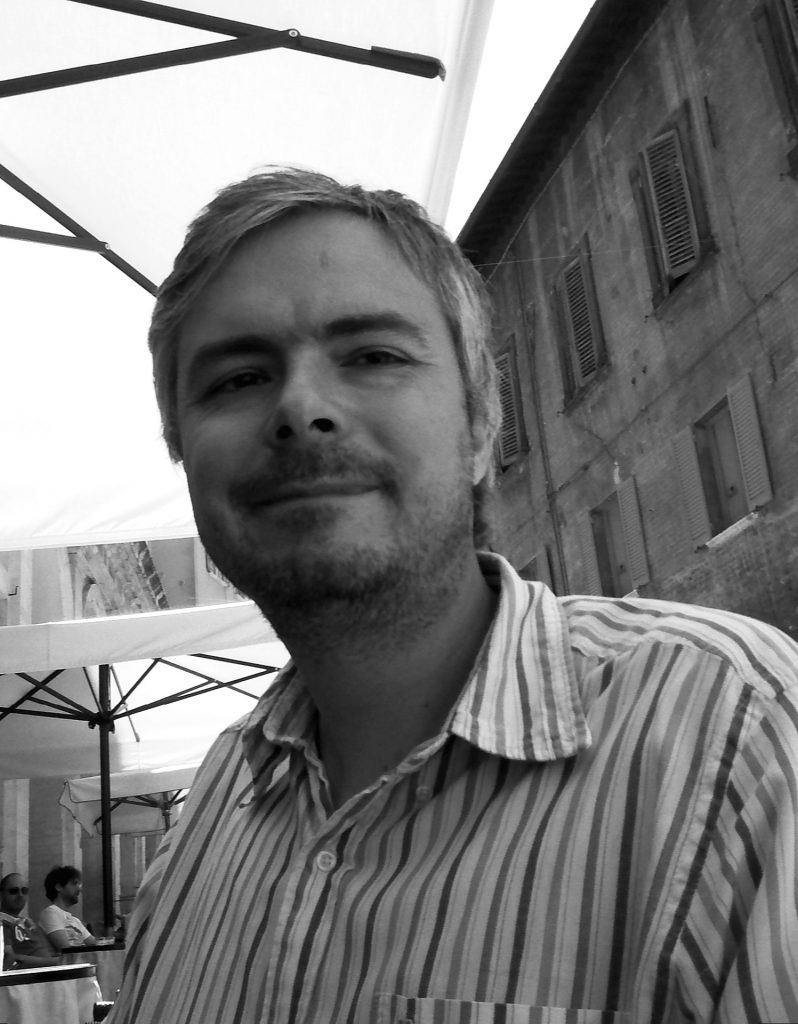
Eduardo Barberis is a full professor of General Sociology at the University of Urbino Carlo Bo, where he coordinates the Bachelor’s degree program in Sociology and Social Work and teaches Methodology and Techniques of Social Research; Immigration Policies; Comparative Welfare Systems. His research interests focus on the territorial dimension of welfare policies and migration, with particular attention to non-metropolitan contexts. He is involved in various international, national, and local research and action-research projects, currently serving as the local unit coordinator for the Horizon 2020 project “Constructing Learning Outcomes in Europe: A multi-level analysis of (under)achievement in the life course” (CLEAR); he also coordinated the AMIF project “Participation in small – and medium – sized towns: Experiences, Exchanges, Experiments” (PISTE) from 2022 to 2024. Among his recent publications: Experimenting Migrant Participation in Small and Medium-Sized Towns: White Paper of the PISTE Project (2024, Urbino University Press; with A. Andriopoulou and F. Rossi); Il lavoro sociale con le persone immigrate. Verso una pratica riflessiva e inclusiva (2024, Maggioli; with P. Boccagni and C. Denaro); Handbook on Urban Social Policies (2022, Edward Elgar; with Y. Kazepov, R. Cucca and E. Mocca).
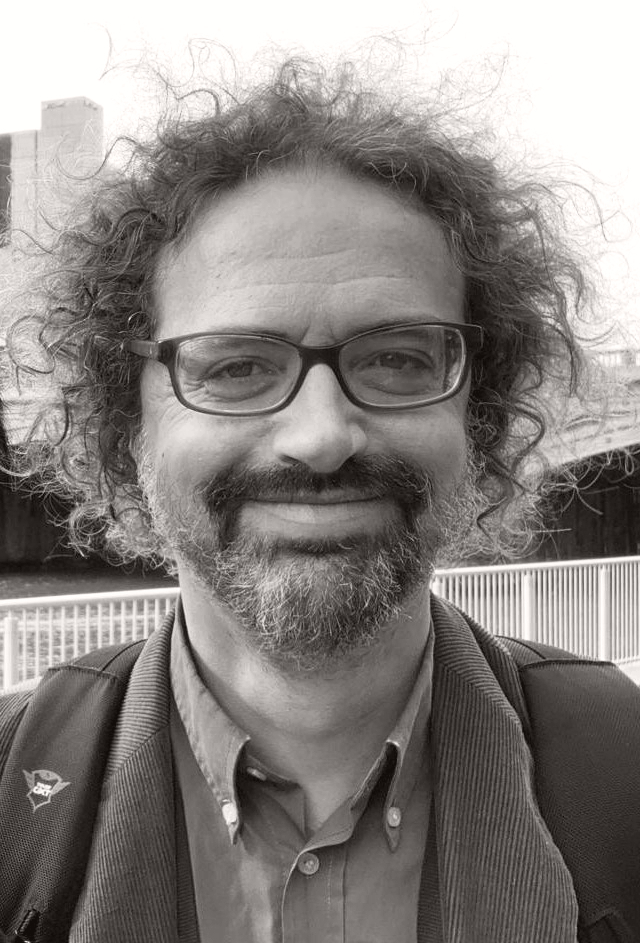
Paolo Boccagni is Professor in Sociology at the University of Trento. A former European Research Council grantee, he has done extensive research and writing on migration, home, diversity and social welfare. Starting from everyday life, his fieldwork tries to scale up and out local insights and findings by way of comparison, resonance, metaphor, and functional equivalence. He is about to conclude a research cycle on the lived experience of home, with a particular focus on temporalities and on the ways of negotiating “nothingness” and ambivalence in asylum reception facilities. Other emerging research concerns involve the social study of shared housing and dwelling, as well as the practice of homing, the production and scaling of relevance, the social working of metaphor, the ways of coping with absence and distance, the encounter with death in migration and the significance of future-related imaginaries and practices. Recent publications include Home in question (coauth., European Jrl. of Cultural Studies, 2022), Of home-comings and home-scales (coauth., Global networks, 2022), Migration and domestic space (co-ed, OA, Springer, 2023), the Handbook on home and migration (ed., Elgar, 2023), La lotta per il tempo (“The struggle for time”, coauth., Meltemi, 2023) and Vite ferme (“Still Lives”, Il Mulino, 2024).

Chiara Davoli has a PhD in Sociology and Applied Social Sciences. She is currently a research fellow at the University of Urbino. From 2020 to 2023 she was a postdoctoral fellow at the University of Siena; she collaborated with the Laboratory on Inequalities and she worked on processes of precarisation in the spheres of life and inequalities, caporalato and labour exploitation. Since 2012, she has collaborated with the Istituto di Studi Politici ‘S.Pio V’ in Rome and the Osservatorio sulla città Glogale. She has carried out research and collaboration activities at various institutes such as Europe Consulting and Eurispes and she is the author of articles and essays in collective volumes. She is co-author with Valeria Tarditi of “Lavoro Diseguale. Voci. esperienze ed immaginari delle donne” (Castelvecchi, 2023). Among other topics, she has dealt with the housing issue, the right to the city and practices from below, social and gender inequalities, poverty, exploitation and caporalato. She is part of the editorial staff of Disurbanità di Machina Deriva Approdi and Monitor Roma.She has a project with Andrea Valentini of mapping and critical cartography “IURMAP Informa Urbis Romae”; she has exhibited this project and other photographs in informal contexts and in museums such as MACRO and MAXXI in Rome.

Emiliano Esposito is a postdoctoral researcher at the Department of Sociology and Social Research, University of Trento (Italy), within a research project ‘Share_DIV: Unveiling the social lives of shared housing between strangers in Italy. In 2019, he got his PhD in Urbans Studies at the Gran Sasso Science Institute in l’Aquila (Italy). His doctoral thesis is about the informal ways of inhabiting and the practice of squatting in public housing in Naples (south Italy). Emiliano has been a postdoctoral researcher at several departments in Italy and Europe, such as the Department of Urban Studies, Polytechnic University of Milan (Italy), and the Department of Geography, University of Manchester (UK). Moreover, he has worked as researcher for grassroots organizations and national research institutes, such as the Institute of Methodologies for Environmental Analysis (National Council of Research, Italy). His research interests, at the crossroads between southern urbanism, urban poverty theory and social movement analysis, are about housing policies, housing informalities and uncanny struggles for the right to housing. He has published several contributions in both national and international journals and magazine. Last, he has published and exhibited some photo-essays on research topics of his interest.
 HOMInG: THE HOME-MIGRATION NEXUS