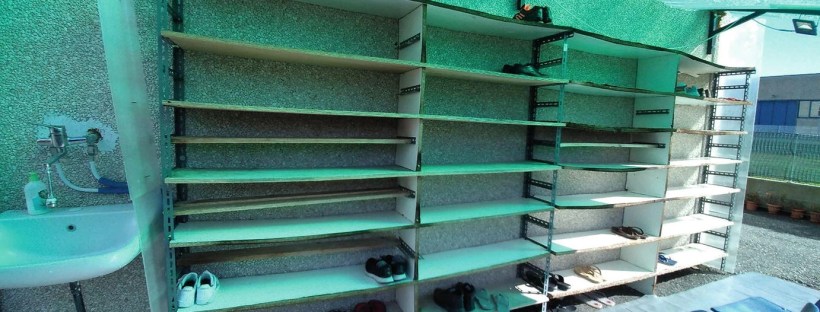
As a part of Migration and domestic space, an OA collection of “ethnographies of home in the making” among migrants and refugees edited by P. Boccagni and S. Bonfanti, Chapter 10 by Sara Bonfanti and Barbara Bertolani explores the lived experience of home in extra-domestic settings such as migrant houses of worship. By their very name, houses of worship are often seen and lived as a special kind of space, with material, relational and emotional connotations that refer back to the idea of home and the investment people infuse into it. For migrants who often belong to religious minorities, they can be considered as (semi)-public homes: community centres often ethnically marked, yet generally open to visitors alike, provided due respect is paid to the sacredness of the place and its rules for admission. Why is it important for a researcher to enter these places? What are the insights to be grasped and under what conditions? This chapter is based on extensive ethnographic research conducted within gurdwaras and mandirs in northern Italy. It analyzes the riddles in entering houses of worship by two means. First, with a cultural geography approach, Bonfanti and Bertolani reflect on the social spatiality that operates within places of worship: how do the aesthetics of a prayer house, its architecture, planning or interior design set borders and produce inside/outside spaces and groups? Who exerts the role of gatekeeping and may consent a visitor other than a devotee to join religious performances and rituals upon certain conditions? The authors then select some ethnographic instances to argue that the guest-host relationship which takes place in migrants’ dwellings is often fraught with even more friction and tensions inside their religious hubs, where politics is anyway involved.
 HOMInG: THE HOME-MIGRATION NEXUS